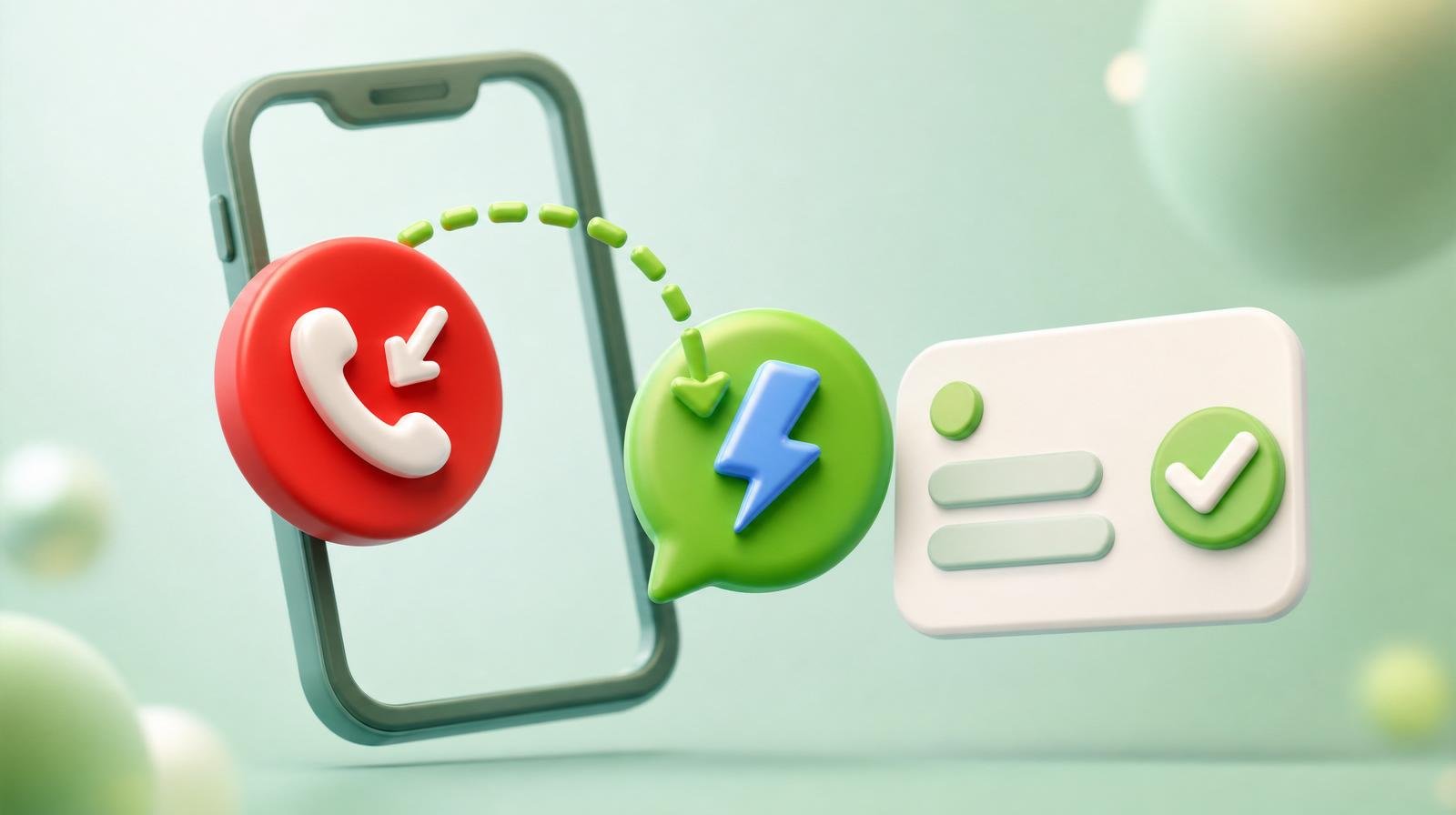
Missed call text back is an automation that fires an SMS to any caller you didn't answer, within seconds of the call ending. The caller gets a real response instead of voicemail, replies by text, and the lead that was about to disappear turns into a conversation you can actually finish.
It's the cheapest lead-recovery automation a small business can run, and it takes about ten minutes to set up. This guide covers how it works, what the message should say, how to handle replies, and where it stops being enough on its own.
Why a missed call is worse than a lost email
Someone who calls has already chosen you. They found your listing, skipped the contact form, and picked the highest-effort channel available because they want an answer now. That intent has a shelf life measured in minutes.
Voicemail doesn't hold that intent. Most callers won't leave one, and the ones who do have usually dialed two more businesses before you hear it. A text arriving 20 seconds after the missed call catches them while they're still deciding.
How the automation works
The mechanics are straightforward. Your phone system detects a call that ended without being answered, checks whether the number is a mobile, and triggers an outbound SMS from your business number.
The two configuration decisions that matter are the trigger delay and the deduplication window. Delay should be as close to zero as your system allows. Deduplication stops a caller who tries three times in a row from receiving three identical texts, which reads as a broken bot.
What the message should say
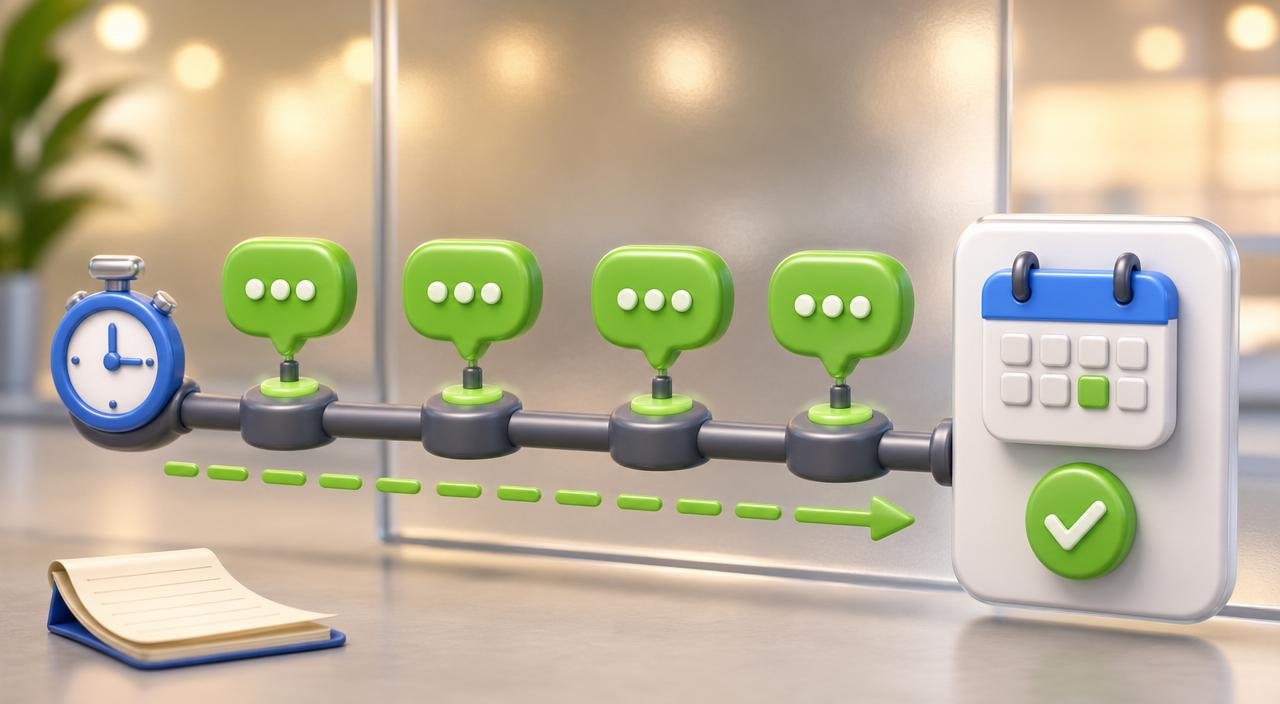
A missed call text has one job: get a reply. Not to explain, not to sell, not to apologize at length.
Identify the business first. An unknown number sending an unprompted text gets deleted. Lead with your name so the caller connects it to the call they just made.
Skip the long apology. "Sorry we missed you" is one clause, not a paragraph. Nobody needs an explanation of why the phone wasn't answered.
Ask exactly one question. "What can we help you with?" outperforms a menu of options, because the caller can answer in four words while walking.
Leave the link out of message one. Links look like marketing and depress reply rates. Send the booking link after they respond, once it's a conversation.
Handling the replies
This is where most implementations fall down. An instant auto-text followed by two hours of silence is worse than no text at all — you've promised responsiveness and then demonstrated the opposite.
Decide up front who owns the inbox and what the response window is during business hours. Route replies somewhere a person actually looks, not a shared line nobody has claimed. And set an after-hours variant of the message that gives a specific callback window rather than implying someone is standing by.
If your reply volume is high enough that a person can't keep up, that's a signal you have a coverage problem, not a texting problem.
Text back vs. answering the call
Text back captures the contact. It does not answer the caller's question, quote a price, or book the job. Those are what the caller actually wanted.
| Voicemail | Missed call text back | AI voice answering | |
|---|---|---|---|
| Caller gets a response | No | Yes, by text | Yes, live |
| Question answered on the spot | No | No | Yes |
| Books the appointment | No | After a reply | During the call |
| Works when caller won't text | No | No | Yes |
| Effort to set up | None | Minutes | Minutes |
Comparing voicemail, missed call text back, and AI voice answering for inbound calls
The strongest setup runs both. Reception AI answers the call in natural speech, handles the intake questions, and transfers or books — at 35 credits per minute (about $0.35/min at $0.01 per credit) plus 300 credits a month (roughly $3) per number. Text back then becomes the backstop for the handful of calls that still slip through, rather than your entire response strategy.
Staying compliant
Replying to someone who just dialed your business is a response to an inbound inquiry, not a cold marketing blast — but the guardrails still apply.
Identify your business in every message. Honor STOP instantly and permanently. Don't roll those numbers into promotional campaigns without separate opt-in, and don't auto-text landlines or numbers that clearly aren't mobile. Keep a record of the inbound call that triggered each message. Rules vary by region and industry, so verify yours before launch.
Our SMS marketing playbook covers consent, timing, and cadence in more depth if you plan to text beyond call recovery.
What to measure
Track four numbers and nothing else: missed calls per week, texts sent, reply rate, and jobs booked from replies. Reply rate is the health metric — if it's low, the message copy is wrong or the send is too slow. Jobs booked is the one that justifies the automation.
Review the actual reply threads monthly. The questions callers ask in those texts are the same questions they'd ask on the phone, which makes them the best possible source for your after-hours script and your FAQ content.
Where it fits in the rest of your setup
Call recovery sits at the end of a chain. People find you, dial you, and either connect or don't. Listings AI makes sure the number they dial is right everywhere it appears, Social AI keeps the demand flowing, and Reviews AI turns each finished job into the social proof that produces the next call.
Set the text back up first because it takes ten minutes, then close the gap properly with voice answering. Start a ClickGrow trial to configure both, or review plan credits on the pricing page.