Marketing automation for small business used to mean a $1,000/month platform and a marketing hire to run it. In 2026 it means a $49/month tool and a focused afternoon of setup. The shift matters because the single biggest reason small businesses lose to bigger ones isn't budget — it's consistency. Automation is what closes that gap.
What marketing automation actually means (in plain English)
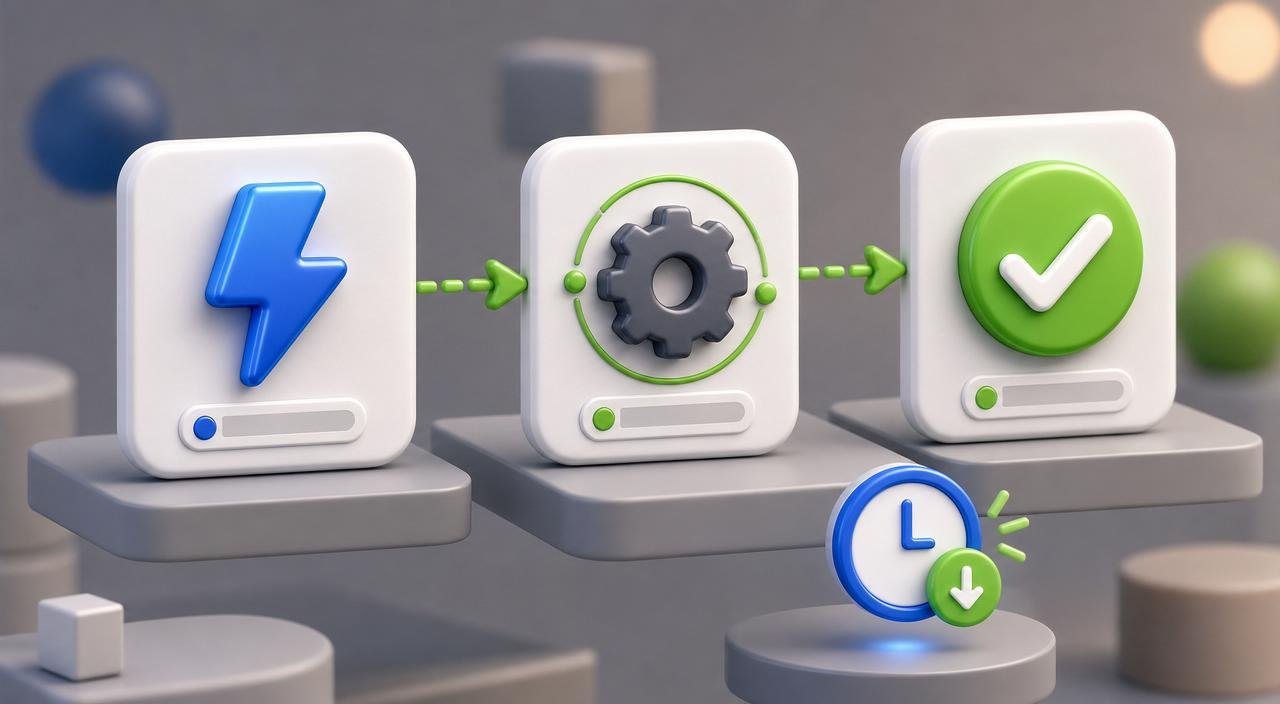
Strip the jargon and marketing automation is just three things stitched together: a trigger (something happens), an action (the system does something), and an outcome (the customer experiences something). If you can draw that on a napkin, you can automate it.
The trigger → action → outcome model
- Trigger — a form fill, a missed call, a review left, 30 days since last purchase
- Action — send an SMS, post a social update, ask for a review, add to a nurture list
- Outcome — customer feels seen, books, refers, returns, or re-engages
Every automation in this guide fits this shape. If a workflow doesn't, simplify it before you build it.
The 5 highest-ROI workflows to automate first
Trying to automate everything is the #1 reason small business automation projects die in week three. Pick from this list, in order, and ship one at a time.
1. Lead follow-up under 5 minutes
The single highest-ROI workflow in any small business. Every form fill, every Facebook lead ad, every chat submission triggers an instant SMS and email: "Got your message — owner will be on the phone in the next 10 minutes." This one workflow typically doubles close rates because most competitors take hours to reply.
2. Missed-call text-back
For service businesses (locksmiths, electricians, salons), 62% of inbound calls go to voicemail (CallRail 2026). The fix is a single automation: phone rings and isn't answered → SMS fires within 30 seconds saying "Sorry we missed you — what can we help with?" Recovers 25–40% of missed calls as booked jobs.
3. Review request after every job
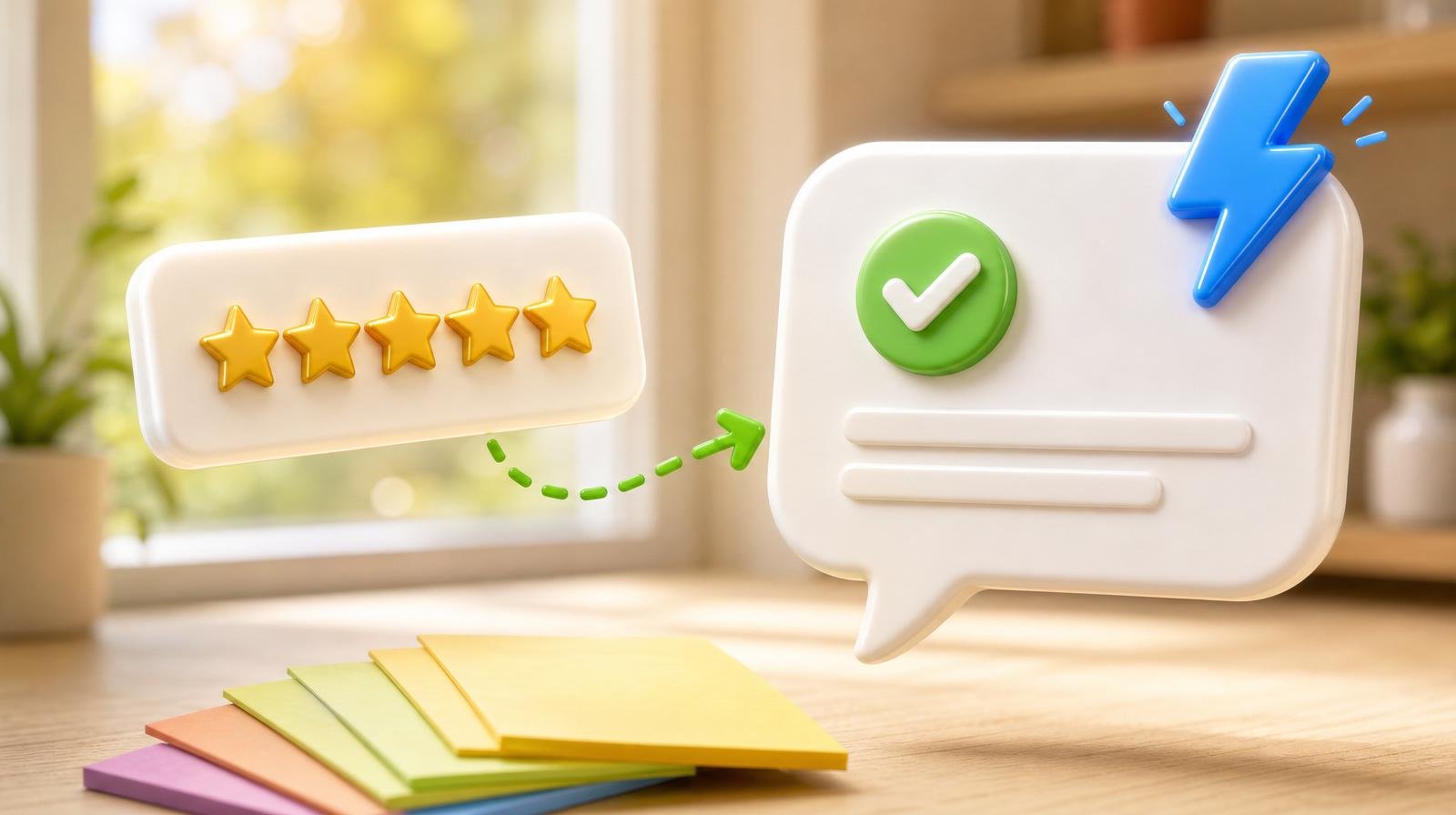
Job marked complete → SMS goes out 24 hours later with the Google review link. Same template, same timing, every time. Businesses that automate this earn 3–5x more reviews per month than businesses that "ask when they remember." Reviews AI runs this workflow end-to-end and drafts replies to every review that comes back.
4. Weekly social posting
Most small businesses post when they remember, which means they post twice in January and twice in March. The fix is not "post more" — it's a calendar that runs on autopilot. Social AI generates a month of on-brand posts across Facebook, Instagram, X, LinkedIn, Pinterest, and TikTok in under five minutes. For the underlying cadence, see our social media automation playbook.
5. 3-email nurture for unconverted leads
Most leads don't buy on day one — they buy on day 17. The fix is a 3-email sequence: day 1 (value), day 7 (proof — customer story or review), day 14 (offer). Automated nurture sequences recover 8–12% of leads that would otherwise go cold. Pair with the strategies in our small business lead generation guide.
The small business automation stack (compared)
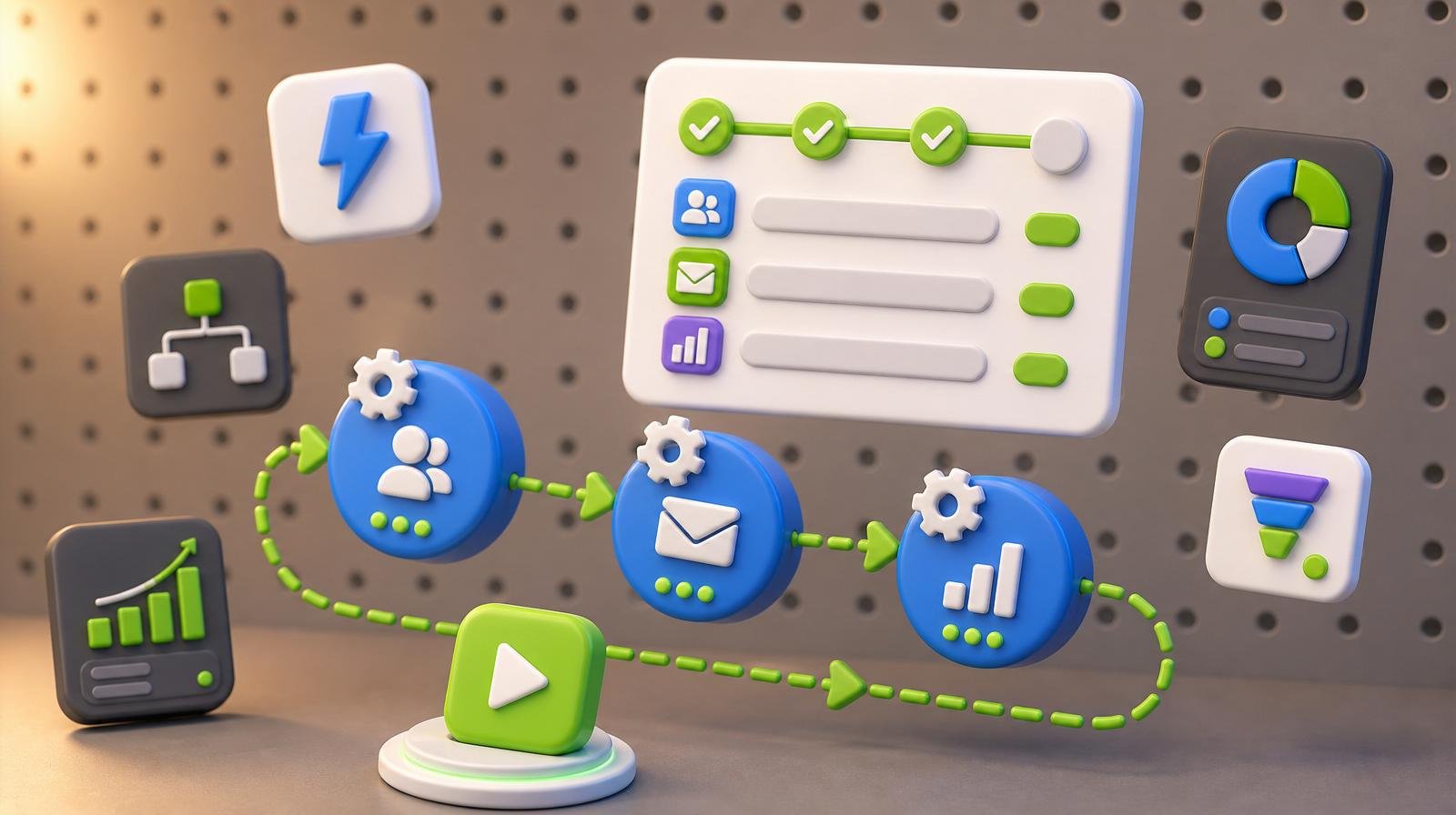
You don't need 12 tools. Most small businesses get the full 5-workflow stack from 2–3 platforms.
| Layer | What it does | Typical cost |
|---|---|---|
| AI marketing platform | Social posting, reviews, brand intelligence — ClickGrow handles this layer | $49–199 / month |
| CRM + email | Lead capture, contact storage, nurture sequences (HubSpot Free, Brevo, FluentCRM) | $0–80 / month |
| Inbox / SMS | Missed-call text-back, 2-way SMS (OpenPhone, Twilio, GoHighLevel) | $15–99 / month |
| Connector / glue | Move data between tools (Zapier, Make) — usually optional in 2026 | $0–29 / month |
Typical small business automation stack (2026).
What NOT to automate (yet)
- Negative review replies — always written by a human, with AI as the first draft. The risk of an auto-reply landing wrong is too high.
- Sales calls — automation routes the appointment, the owner runs the conversation. AI voice agents aren't ready for closing yet.
- Personal thank-yous to your top 20 customers — these are the moments that earn referrals. A handwritten note still beats a template.
The 4 mistakes that kill small business automation
- Automating everything in week one. Three workflows live and stable beats twelve workflows half-built.
- No measurement window. Wire a workflow, watch it for 14 days, then iterate. Skipping the watch phase guarantees you can't tell what's working.
- Sounding like a robot. Auto-replies that read like form letters destroy trust. Use AI tools that learn your voice — that's where Brand Intelligence pays off.
- Stacking 6 tools when 2 would do. Every integration is a future breakage. Pick consolidated platforms first, point tools second.
What to set up this week
- Wire one auto-reply on every inbound form, missed call, and DM. (60 minutes)
- Turn on automated review requests 24 hours after every job or sale. (30 minutes via Reviews AI)
- Generate next month's social calendar in one pass with Social AI and schedule it. (5 minutes)
That's three workflows, an afternoon of setup, and roughly 6–10 hours a week back forever. The deeper playbook on what else to automate is in our small business automation guide. When you're ready to wire the marketing layer, start free on the ClickGrow signup page or compare plans on the pricing page.