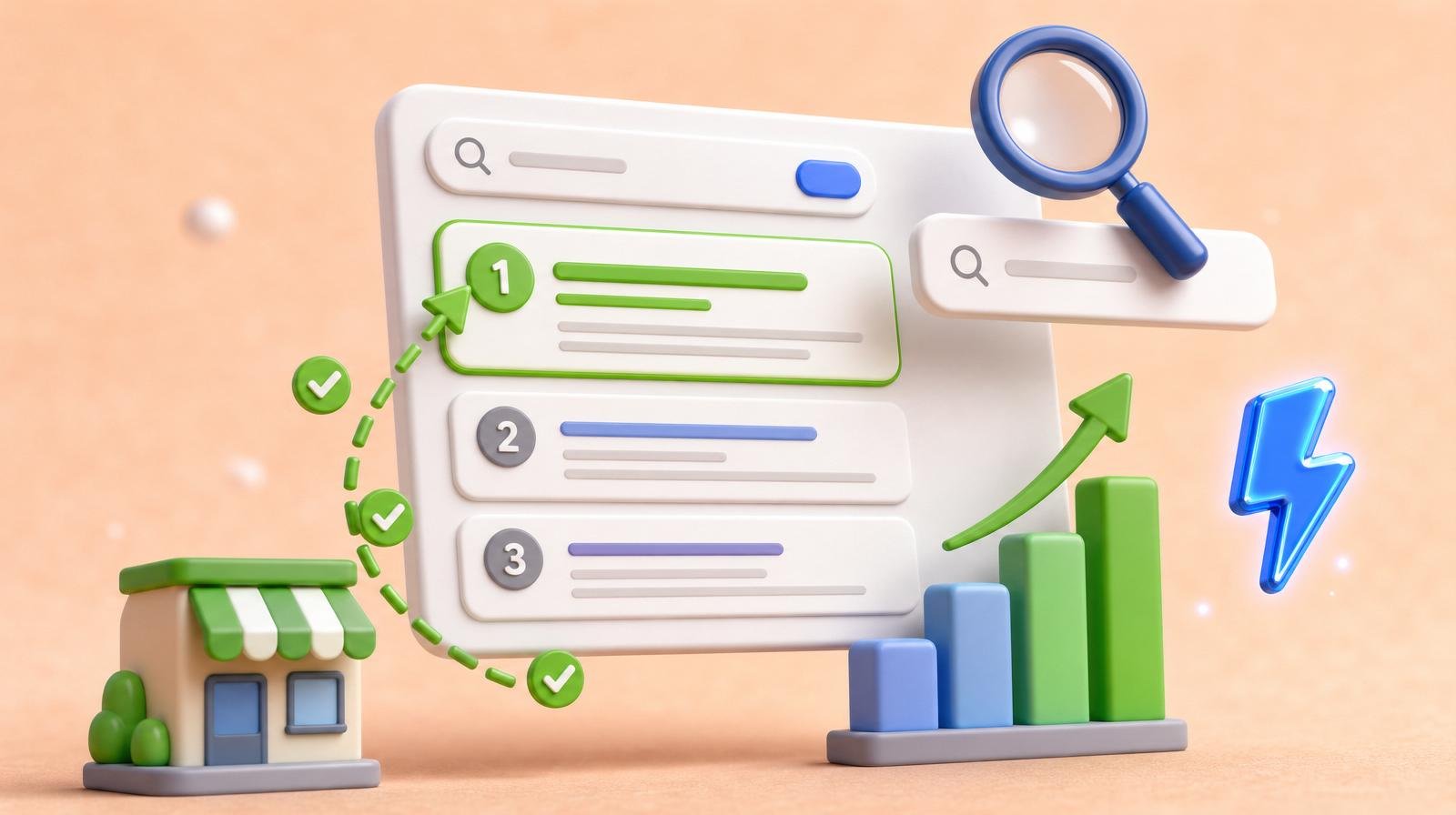
Online reputation management (ORM) is the ongoing practice of shaping what a prospect finds when they search your business — on Google, on review sites, and now inside AI search tools. In 2026 it's no longer optional. Your reputation is a real, measurable revenue lever.
Here's the 6-step ORM framework built for small teams that don't have a full-time marketer — plus the specific automation stack that keeps it running.
What online reputation management actually means in 2026
Ten years ago, ORM was mostly about star ratings. Today it covers four surfaces at once:
- Search results. The first page of Google for your business name.
- Review scores. Google, Facebook, Yelp, Better Business Bureau, industry-specific platforms.
- Social mentions. Tagged posts, reels, and public comments on Instagram, TikTok, X, and Facebook.
- AI search descriptions. How ChatGPT, Perplexity, Google's AI Mode, and Microsoft Copilot describe you when a prospect asks.
The four surfaces feed each other. A wave of new 5-star Google reviews doesn't just move review score — it changes how AI tools describe you, and it improves local pack rankings, which changes what appears in search results.
The 6-step ORM framework
Every small-business reputation program has these six steps
- Audit — see what a prospect actually sees when they search you.
- Monitor — real-time alerts on new reviews, mentions, and search changes.
- Request — a systematic way to earn new 5-star reviews from happy customers.
- Respond — reply to every review, positive and negative, within 48 hours.
- Escalate — a playbook for genuinely bad reviews or attempted defamation.
- Publish — About page, blog, and social content that shapes the top 10 results.
Steps 1–4 are weekly. Step 5 is rare-but-critical. Step 6 is quarterly.
Step 1: The reputation audit
Open an incognito window. Type your business name. Then type your business name + city. Then type your business name + "reviews." Screenshot the top 10 results for each. Then do the same on Bing, and ask ChatGPT and Perplexity: "Tell me about [business name] in [city]. Is it good?"
You now have a baseline. Score every visible surface:
- Google Business Profile star average + review count.
- Facebook, Yelp, BBB, industry sites star average.
- Any negative content in the top 10 organic results.
- How AI tools describe you — accurate? Positive? Missing?
Step 2: Monitor continuously, not quarterly
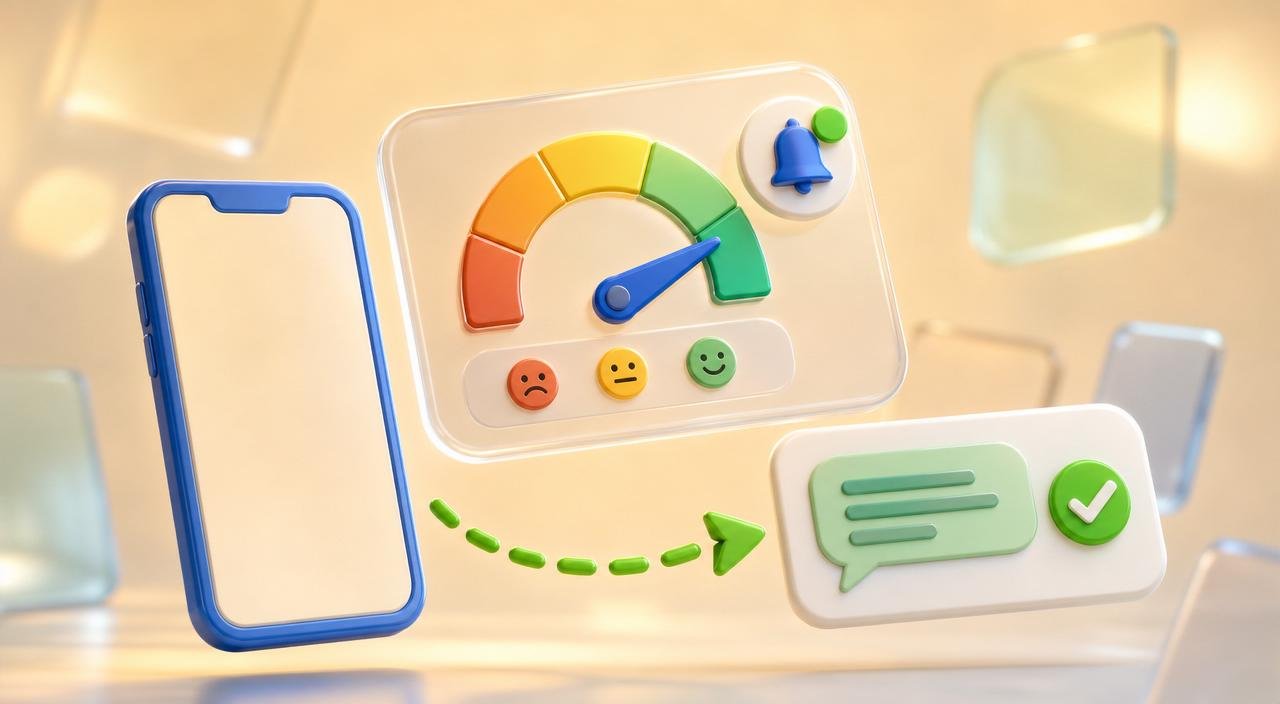
The old way — checking Google once a month — no longer works. A negative review that sits unanswered for two weeks is a five-figure conversion problem. You need real-time alerts on every review platform, plus alerts on social mentions of your business name.
Every major review platform now offers webhooks or email alerts. Wire them all to one inbox (or one tool like Reviews AI), and set a 24-hour SLA for every alert. If you can't respond inside 24 hours, someone else on the team needs the alert.
Step 3: Request reviews systematically
Waiting for reviews is the mistake that traps most small businesses at 12 reviews for years. Businesses that grow their review count 3× in a year almost always share one habit: they ask every satisfied customer, every time, through a repeatable system.
The 3 highest-ROI request patterns:
- Post-transaction SMS. Sent within 2 hours of a completed job or purchase, with a direct-to-Google review link. Response rates typically 15–30%.
- Email with review link. Sent 24 hours after the SMS to non-responders. Response rates typically 5–10%.
- In-person QR code. At the counter, on the invoice, on the vehicle wrap. Response rates vary but the floor cost is zero.
See the full Google review request templates and the Google review QR code generator for the copy-paste versions.
Step 4: Respond to every review — within 48 hours
Google's own research shows that businesses replying to reviews earn a higher average star rating over time. Reviewers who get a thoughtful reply are more likely to revise a low rating upward; positive reviewers are far more likely to review you again.
For positive reviews, use the response templates that reinforce specific value — never a generic thanks. For negative reviews, the four rules:
- Respond within 48 hours.
- Never argue publicly.
- Acknowledge the specific issue in one sentence.
- Move the conversation offline with a real name and contact.
Our negative review response guide has the exact templates and the mistakes that make things worse.
Step 5: Escalate the outliers
Some reviews aren't customer feedback — they're competitor sabotage, extortion attempts, or clear violations of the platform's terms. Google removes reviews that name a different business, use profanity, or reveal that the reviewer never used the service.
The escalation playbook: document the review, flag it through the platform's official removal process, and — for genuinely defamatory content — escalate through a lawyer, not publicly. Never engage in comments; it amplifies the problem. See how to remove a Google review for the current 2026 removal criteria and the exact steps.
Step 6: Publish content that shapes the top 10 results
The last mile of ORM is offensive, not defensive. The top 10 Google results for your business name should be surfaces you control: your homepage, About page, LinkedIn, Google Business Profile, review platforms, and a few high-quality third-party mentions.
Fill any gap in the top 10 with content you publish and rank — a strong About page, a customer stories page, a blog, social profiles kept current. See how to write an About Us page and the small business branding guide for the mechanics — and Brand Intelligence builds a reusable brand profile from your existing site so every future piece of content sounds consistent.
How AI search is changing ORM
A prospect who used to type "best plumber Denver" into Google now often asks ChatGPT or Perplexity the same question in plain English. Those tools synthesize an answer from Google Business Profile data, review content, and About pages — then quote 1–3 businesses by name.
The mechanical implication: your review content is now source material for AI. A well-written positive-review reply is quoted by AI tools; a poorly-worded, defensive negative response is also quoted. Every response you write matters twice — once for the human reviewer, once for the AI model reading the page later. See the full breakdown of how reviews affect Google and AI rankings for the mechanics.
The small-business ORM stack
For a business under $5M in revenue, the minimum viable ORM stack:
- Review monitoring + response tool. Real-time alerts and AI-drafted replies you approve.
- Listings management. Keep NAP, hours, and photos consistent across 30+ directories.
- Review request automation. Post-transaction SMS + email to every happy customer.
- Brand-controlled content. Homepage, About, blog, and social — kept current.
ClickGrow bundles the first three: Reviews AI for monitoring, requests, and responses; Listings AI for NAP consistency across directories; Social AI for the social surfaces AI tools now cite. Compare with our roundup of the best review management software to see how the pieces fit together.
Start with the audit — today
The single highest-ROI ORM move you'll make this quarter takes 20 minutes: run the audit in Step 1, then fix the biggest visible gap. Miss a review reply? Reply now. Wrong phone number on Yelp? Fix it now.
Then automate the rest. Scan your listings free to see exactly what a prospect finds today, or start a free ClickGrow account and put review monitoring, requests, and responses on autopilot. See pricing when you're ready.